
The Battery Passport Is Seven Months Away. Here’s What the Industry Is Actually Worried About.
The session included a live survey of the 91 companies attending, most of them large enterprises operating in the EV battery or industrial battery space. When asked about their biggest implementation challenge, 63% said data availability and quality. Unique identifiers and 2D codes came last, at 15%.
That gap makes sense from where we sit. Getting the digital infrastructure right for a Battery Passport is genuinely hard. Data standards, API integration, supplier data collection, access rights, IT architecture: these are complex, expensive and time-consuming problems. We don’t underestimate any of that.
But here’s the bit that doesn’t get talked about enough. None of that digital infrastructure works if the physical mark on the battery is wrong.
The QR code on the battery housing is the key. Every digital record, every data point in the passport, every access tier, every audit hangs off that physical mark. If the mark is illegible, damaged or gone, the whole chain breaks. The battery passport itself must exist, be filled and be registered at the moment the battery is placed on the EU market. Not later. Not at commissioning. When the battery ships.
So while most of the industry is focused on the data problem, someone needs to have already solved the physical one. That someone is often a design engineer responsible for the part drawing that dictates marking requirements, not a data architect. In our experience, that conversation tends to happen later than it should.
What the regulation confirms about the physical mark
The rules on what gets physically applied to the battery are already set out in Article 13 of the EU Battery Regulation, Regulation (EU) 2023/1542.
The general labelling requirements, covering capacity, chemistry and the separate collection symbol, apply from 18 August 2026. The QR code that links to the Battery Passport itself is a separate requirement, due from 18 February 2027, the same date the passport becomes mandatory. Both dates matter, and they’re worth not conflating when planning a marking project.
For imported batteries, cells or packs coming from outside the EU, compliance obligations sit with whoever first places the battery on the EU market. If you’re importing cells and assembling them into packs here or elsewhere in Europe, you’re the manufacturer for compliance purposes under Article 38 of the regulation. The marking obligation sits with you.
Second-life batteries need new marks too. Article 13(9) requires that a battery which has been prepared for re-use, repurposed or remanufactured must carry new labels or markings showing its change of status, accessible through the QR code. This is an ongoing marking requirement for the second-life sector, not a one-off exercise.
The testing environment is live
This is perhaps the most immediately practical point from the session. The Commission launched the DPP Registry and its testing environment on 20 July 2026. Manufacturers can now start testing their Battery Passport registrations.
For that end-to-end test to mean anything, the physical mark on the battery needs to carry the unique identifier the digital record depends on. A manufacturer who hasn’t yet specified or installed a marking system can’t complete a meaningful test. If you’re planning to spend August and September working through the data and IT side of your Battery Passport project, the marking system needs to be decided first, not after.
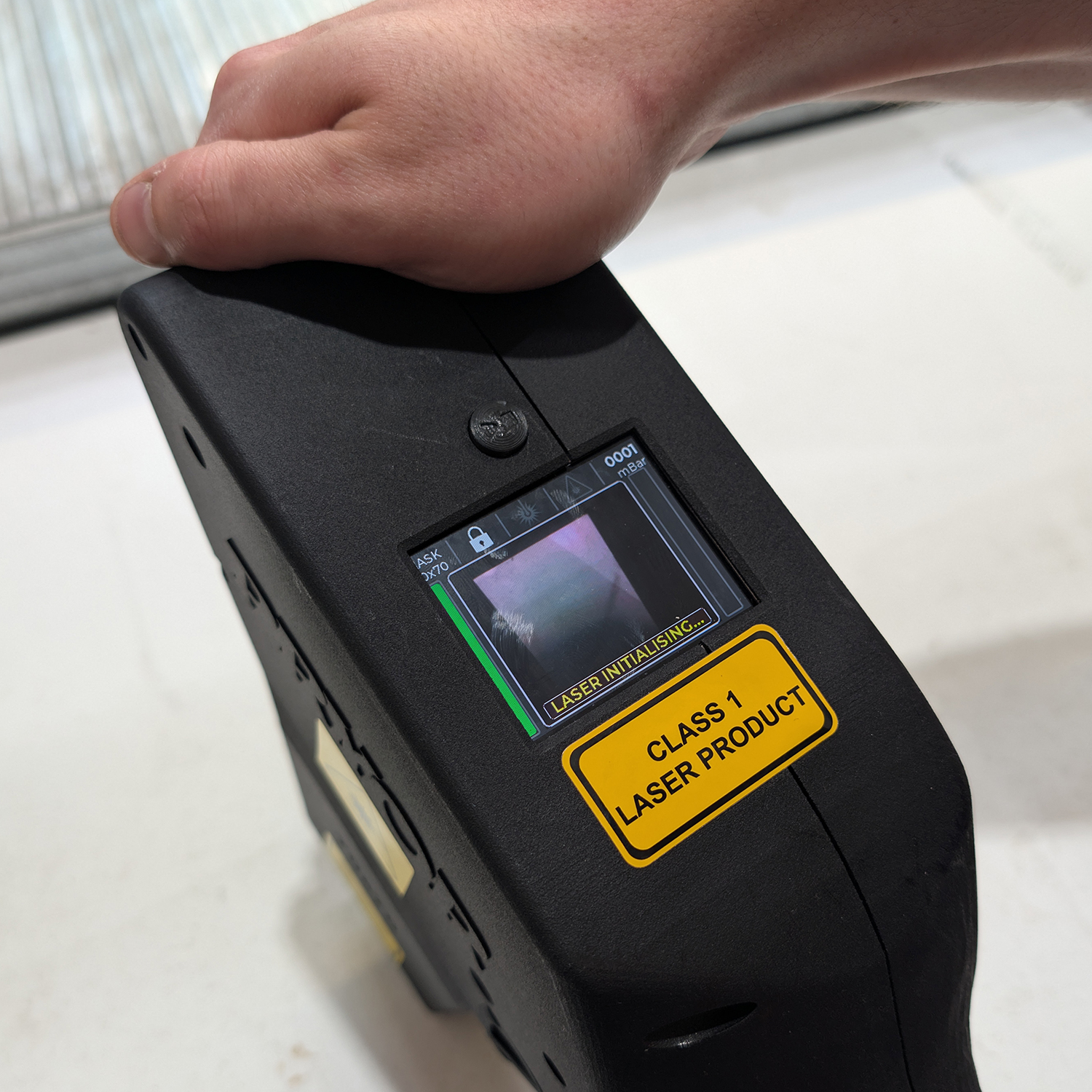 For manufacturers who need to move quickly, the Pryor Portable Laser can put permanent, regulation-compliant marks onto battery housings without the lead time of a full integrated line installation. That makes it a practical option for pilot programmes and early compliance testing.
Where we are in the conversation
The posts we’ve published so far on this topic have covered what the regulation requires , what indelible actually means in practice , and why adhesive labels don’t satisfy the requirement . Nothing in the July webinar changes any of that. 18 February 2027 is still the date. The clock is still running.
What the webinar adds is context. Most of the industry is focused on the digital layer of the Battery Passport, and that’s reasonable, because it’s genuinely the harder problem. But the physical layer, the permanent, machine-readable, ISO-verified mark on the battery housing that makes the digital layer accessible, needs solving first. Data without a mark is a passport nobody can open.
Our laser marking systems are built for exactly this application: permanent, verified, production-line-speed marks on metal battery housings that satisfy the indelibility requirement and generate the ISO-compliant 2D codes a Battery Passport depends on. If you’re reviewing your marking and traceability processes, or need to have that conversation before your commissioning window closes, get in touch with our team.