What EV battery manufacturers need to know about the new marking and traceability requirements.
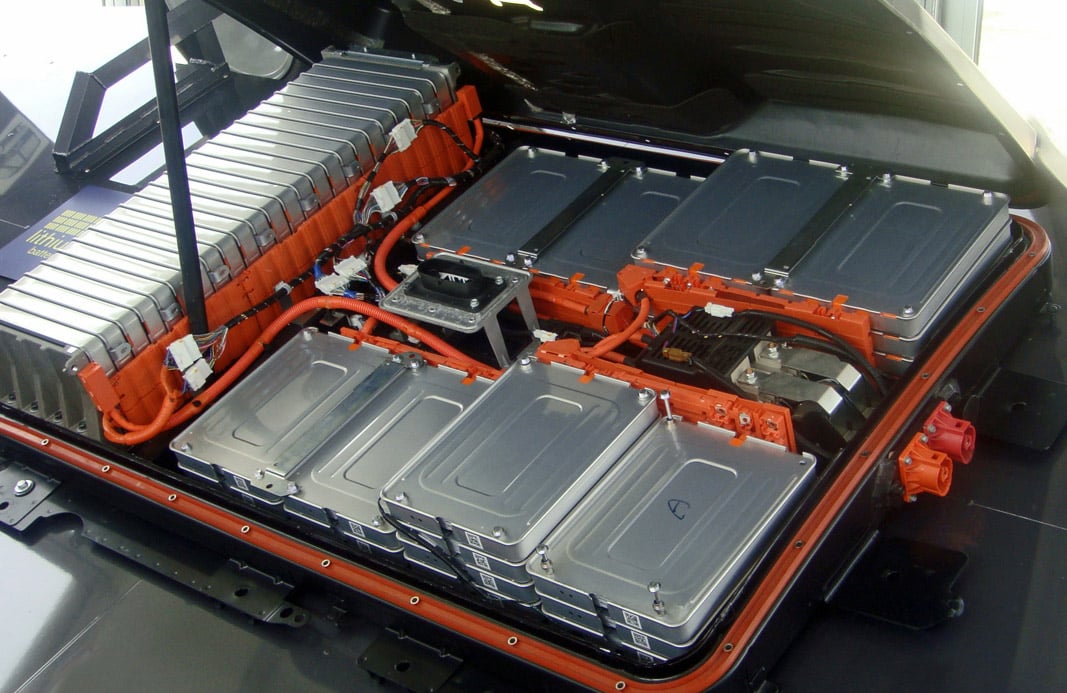
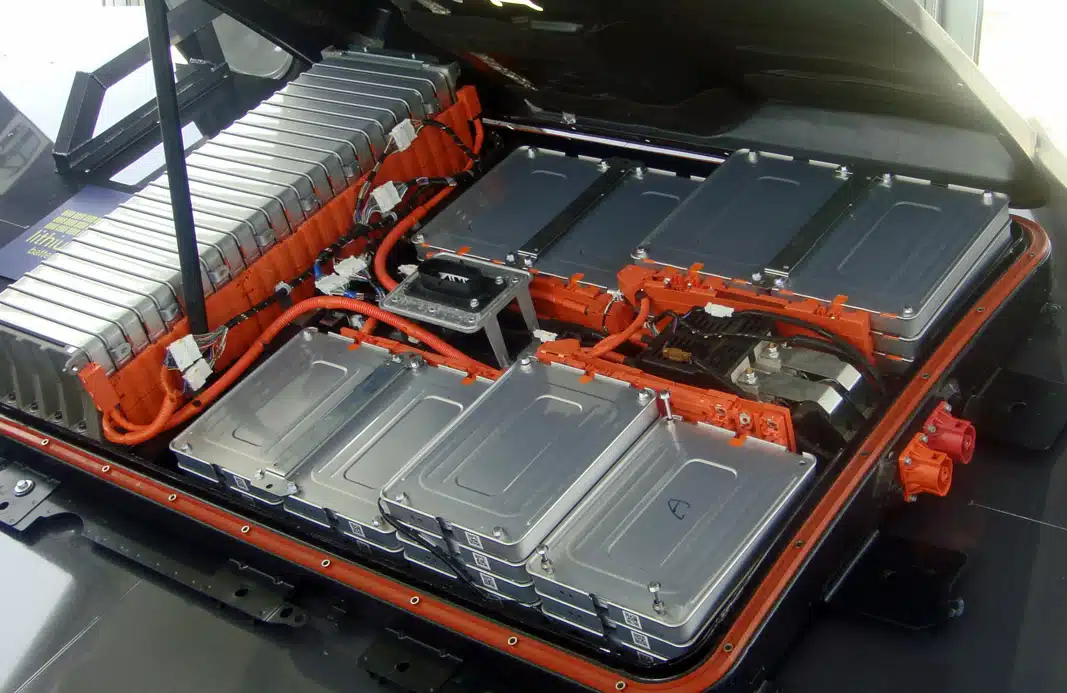
Electric vehicle battery production is growing fast, and so is the regulatory scrutiny that comes with it. Regulation (EU) 2023/1542, the new EU Battery Regulation, introduces mandatory physical marking and digital traceability requirements affecting every manufacturer producing or supplying batteries into the European market. For companies making EV battery cells, modules and packs, the compliance clock is already ticking.
At Pryor, we’ve spent over 175 years helping manufacturers mark and trace components across some of the most demanding industries in the world – aerospace, automotive, medical and energy. EV battery manufacturing is, in many ways, the convergence of all of them. High-volume production, tight tolerances, harsh chemical environments, and now a raft of new regulatory requirements for permanent, machine-readable markings linked to digital records. It’s a territory we know well.
This post sets out what the regulation requires, what it means in practical terms on the production line, and how Pryor’s marking and traceability solutions can help you meet it.
What does the EU Battery Regulation require for physical marking?
In short: from August 2026, all batteries placed on the EU market must carry a QR code that is printed or engraved visibly, legibly and indelibly on the battery itself. From February 2027, EV batteries and industrial batteries above 2kWh must also carry a Digital Battery Passport, accessible by scanning that QR code. CE marking has been mandatory since August 2024. All markings must be permanent: adhesive labels and inkjet printing do not meet the indelibility standard set out in Article 13(7) of the regulation.
The word indelible is doing a lot of work in that legislation. It rules out any marking method that could fade, peel or be removed over the battery’s service life – which, for an EV pack, could be 15 years or more. In practice, it means laser engraving or dot peen marking applied directly to the battery housing. For manufacturers currently relying on labels or ink-based coding, this represents a significant process change. It’s also one that cannot be ignored or put off, as changing processes and acquiring machines can take time.
What the EU Battery Regulation actually requires
Regulation (EU) 2023/1542 came into force in August 2023, replacing the old Battery Directive (2006/66/EC). Its scope covers batteries across their entire lifecycle, from raw material sourcing to end-of-life recycling. For manufacturers and their suppliers, though, the most immediate obligations relate to physical marking, labelling, and digital traceability. These are being phased in over the next few years.
Deadline
Requirement
Applies to
August 2024
CE marking mandatory: visible, legible and indelible
All batteries
August 2026
QR code mandatory: printed or engraved on the battery
All batteries
2026
Full labels required: serial/batch number, capacity, chemistry, hazardous substances
All batteries
February 2027
Digital Battery Passport mandatory: linked via QR code
EV, LMT and industrial batteries >2kWh
The language used in the legislation is important. Article 13, paragraph 7 of the Regulation states that labels and QR codes “shall be printed or engraved visibly, legibly and indelibly on the battery.” That word – indelibly – rules out adhesive labels, inkjet printing and any other marking that could fade, peel or be removed over the battery’s lifetime. For manufacturers, it means investing in direct part marking technology that creates a permanent, integral mark in or on the battery housing itself.
The Digital Battery Passport and why the QR code matters
What is the Digital Battery Passport and when does it become mandatory?
The Digital Battery Passport is a structured electronic record, accessible via a QR code physically applied to the battery, that stores data on the battery’s chemistry, carbon footprint, state of health, raw material origins, and recycling instructions. It becomes mandatory from 18 February 2027 for all EV batteries, LMT batteries and industrial batteries with a capacity above 2kWh placed on the EU market.
The QR code is the physical bridge between the battery and its digital record. It needs to remain readable for the entire usable life of the battery. A laser-engraved QR code, cut into the surface of a metal battery housing, will survive charging cycles, temperature extremes, vibration and chemical exposure. A printed or labelled one, under those conditions, won’t.
Why laser marking for QR codes on battery housings? Fibre laser marking creates a high-contrast, high-resolution 2D code directly in the material surface. There’s no ink, no adhesive, nothing to degrade. The mark is as durable as the part itself – and can be read reliably by standard 2D readers even after surface treatment, painting or exposure to battery electrolytes.
The regulation also requires that labels include a unique identifier for each battery: a serial or batch number that links the physical unit to its passport record. This needs to be assigned, tracked and managed across the production process, and consistent with whatever database or ERP system is managing the passport data.
What this looks like on a battery production line
Battery manufacturing operates at high volume. A gigafactory producing hundreds of thousands of cells per month can’t afford a marking process that introduces bottlenecks, rejects, or rework. The marking solution needs to be fast, accurate, and fully integrated into the production line workflow – not a standalone process bolted on at the end.
In practice, the marking requirements under the Battery Regulation are likely to apply at multiple points in production:
Cell level: individual cells may need unique identifiers to support full traceability through module and pack assembly
Module level: module housings will require QR codes, CE marks and labelling information under the regulation
Pack level: the Battery Passport QR code and all mandatory label information must be present on the completed pack before it leaves the facility
Each of these presents slightly different marking challenges. Cell surfaces are often curved, small and may be subject to downstream treatment processes. Module and pack housings are typically larger and more accessible but may still require integration into automated line processes with tight cycle times.
How Pryor can help
Pryor has been supplying marking and traceability systems to the automotive industry for decades. We were awarded the Queen’s Award for Innovation in 2020 for our work developing high-speed laser VIN marking systems for Jaguar Land Rover, and we’re the trusted partner to OEMs across the UK and internationally for bespoke, production-line-integrated marking solutions. EV battery marking is a natural extension of that expertise.
Laser marking for direct part marking of QR codes and identifiers
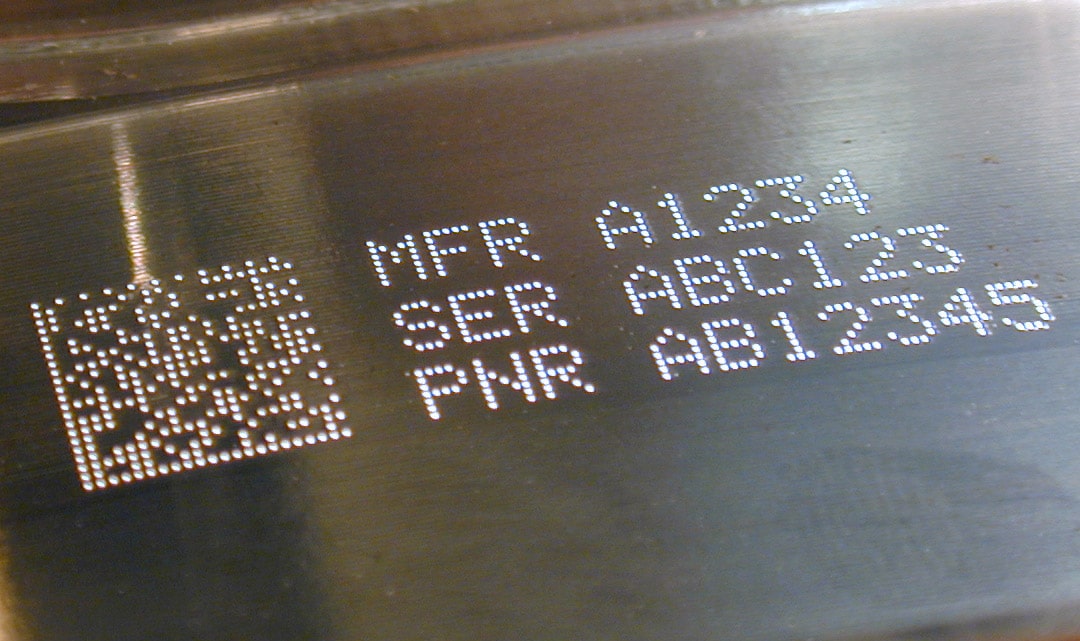
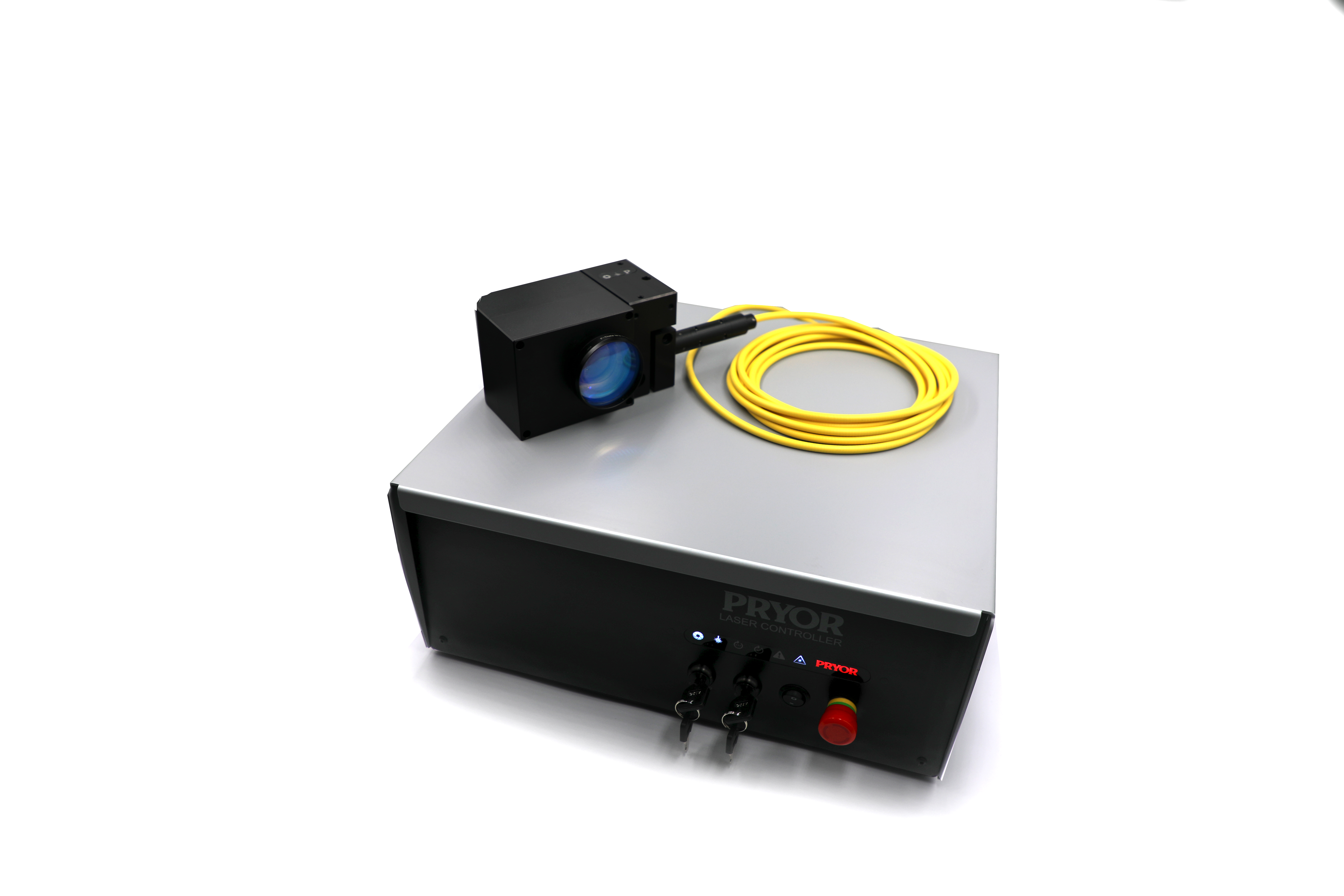
Our fibre laser marking systems are well suited to the requirements of the Battery Regulation. They can engrave high-contrast QR codes, DataMatrix codes, serial numbers and CE marks directly into metal and polymer battery housing surfaces. The marks are permanent, chemical-resistant and achieve grades that exceed the requirements of ISO/IEC 15415 for 2D symbol quality.
We’ve demonstrated laser DataMatrix codes as small as 0.7mm, at the extreme end of miniaturisation, but for battery housing applications a standard 5-10mm QR code is easily achievable at production line speeds. Our bench and floor-standing laser systems are available off the shelf, and our engineering team can design and build bespoke integrated marking cells for high-volume automated production lines.
Why is laser engraving the right method for battery QR codes, rather than labels or inkjet?
The EU Battery Regulation requires markings to be indelible – permanent for the life of the battery. Labels can peel, inkjet can fade, and neither survives the chemical and thermal environment inside an active EV battery pack. Laser engraving removes material from the surface of the housing and creates a mark that cannot be separated from the part. It also produces machine-readable QR codes at the quality grades required for reliable scanning throughout a battery’s service life, including after surface treatment or exposure to electrolytes.
Dot peen marking for serial numbers and batch codes
Where QR codes are being managed digitally and the physical mark only needs to carry a serial number or batch reference, dot peen marking offers a fast and cost-effective alternative. Pryor’s dot peen marking systems produce permanent, embossed alphanumeric marks and simple 2D codes on metal surfaces, and are widely used across the automotive supply chain.
Bespoke integrated marking cells for production lines
For manufacturers who need marking integrated directly into their production line process, Pryor’s engineering team designs and builds custom marking cells to fit. We have extensive experience building robotic and manipulator-based laser marking systems for automotive OEMs – the same integration capability applies directly to battery pack marking applications. We can accommodate specific cycle time requirements, part handling constraints, and integration with vision verification to confirm mark quality and readability post-marking.
You can find more detail on our VIN marking systems page and our automotive marking solutions, both of which illustrate the kind of bespoke engineering we bring to high-stakes automotive marking applications.
Traceable IT software for unique ID management and database integration
Permanent marks on the battery are only part of the picture. The Battery Passport requires those physical identifiers to link reliably and accurately to a digital record. That means the marking process needs to connect to your wider data infrastructure: your MES, ERP or the designated Battery Passport registry.
Pryor’s Traceability software does exactly this. It controls the marking process, manages unique serial number allocation, logs marking data against component records, and integrates with SQL databases, MES platforms and ERP systems via standard protocols. For battery manufacturers, this means the marking station can automatically receive the unique ID to be marked, apply it, verify the mark quality, and log the result – all without manual input, and with a full audit trail.
The software also enables cross-checking across multiple marking stations to ensure serial number uniqueness, and supports reporting and traceability queries. Both are useful for demonstrating compliance to regulators and for managing recalls if they become necessary.
What about UK manufacturers?
Post-Brexit, UK battery manufacturers aren’t subject to the EU Regulation directly – but if you’re supplying batteries or battery-containing vehicles into the EU market, you are. And the UK government has signalled its intention to develop equivalent requirements aligned closely with the EU framework, as part of its broader approach to EV and battery supply chain policy.
The practical implication is simple: investing in permanent, production-line-integrated marking and traceability now positions UK battery manufacturers for compliance in both markets, without needing to retrofit solutions later.
The regulation is clear that marking must be indelible. That means built into the manufacturing process from the outset, not added on afterwards. The earlier you address it, the easier it is to get right.
Getting ready
How long does it take to implement a compliant battery marking system?
Industry guidance suggests a realistic implementation timeline of 12–18 months for manufacturers establishing new digital traceability infrastructure – and that’s before accounting for the physical marking equipment, integration testing, and production validation that a line-integrated laser system requires. With the QR code requirement arriving in August 2026 and the Battery Passport deadline in February 2027, manufacturers who haven’t started reviewing their marking processes now are already running close to the wire.
The 2027 deadline for Battery Passports may feel comfortable from where you are now, but implementing a production-line-integrated marking and traceability system takes time. Specification, procurement, integration testing and software development all need to happen well in advance of go-live. The QR code requirement that sits upstream of the passport, mandatory from August 2026 on all batteries, is closer than it looks.
We’d recommend that manufacturers producing EV batteries, or battery modules and packs for the EV sector, start reviewing their marking and traceability processes now. The questions to ask are: Is our current marking method capable of producing indelible QR codes to the required quality grade? Is our unique ID management robust enough to feed a Battery Passport system? Are our marking stations integrated with our production data, or operating as standalone processes?
If the answer to any of those is uncertain, it’s worth having a conversation with us. Pryor has the engineering experience, the product range, and the automotive industry pedigree to help you get to where you need to be.
Contact the Pryor Team
Contact our team at pryormarking.com or call +44 114 276 6044 to discuss your battery marking requirements.
Motorbike and bicycle owners prioritize safety gear and responsible riding, and rightly so. However, traceability marking is a critical yet... read more
Introduction:
Pryor have become a trusted leader in delivering complex and reliable marking systems within the automotive industry. These have ranged... read more