
Which Vision Camera Do You Actually Need?
A Guide to the ReadSmart and VeriSmart 4 Vision Camera Range
Every mark we apply eventually gets checked. The real question is how much checking the application actually needs, and that’s where most conversations about vision cameras go wrong. Customers ask us for “a camera” when what they need is an answer to a narrower question: does the code just need to read, or does it need to be verified against a standard someone else will audit?
We have three integrated camera systems, focused around that question: ReadSmart 4, ReadSmart+OCR 4 and VeriSmart 4. All three run through our MarkMaster 4 software, so inspection triggers automatically as part of the marking cycle rather than as a separate step bolted on afterwards. Where they differ is how far each one checks, and that’s what determines which one is right for a given part.
ReadSmart 4: does the code read?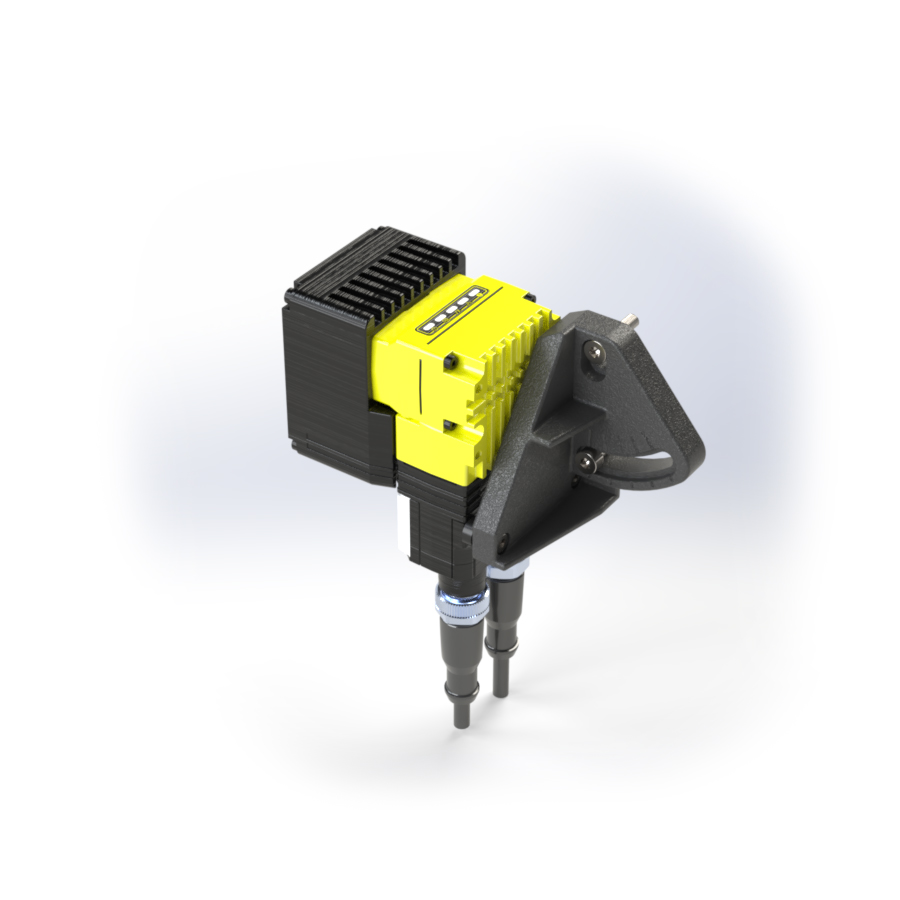
ReadSmart 4 answers the simplest and most common question: can an industrial barcode reader actually read this Data Matrix code? It’s built around the Cognex DataMan 290, a compact fixed-mount reader that combines AI-assisted decoding with integrated lighting. We trigger it immediately after marking, so a failed read gets caught before the part leaves the station rather than three operations downstream.
It doesn’t do OCR and it doesn’t grade a code against a verification standard. For laser and dot peen marks on metal and other difficult surfaces, that’s often exactly the right amount of checking, and it’s the most cost-effective option in the range.
ReadSmart+OCR 4: when the surface fights you
Some parts make reading harder than others. Rough cast surfaces, sawn faces, rough machined faces, VIN characters on painted panels of varying colours: these are the applications where a standard reader starts to struggle. ReadSmart+OCR 4 is built for exactly that, using the Cognex In-Sight 2800 platform with an inbuilt lighting module tuned to control illumination on difficult surfaces.
It reads Data Matrix codes and recognises human-readable text in the same inspection, so you get confirmation on both the machine-readable code and the text a person would read. It’s the middle option: more capable than ReadSmart 4, but it still isn’t full verification grading.
VeriSmart 4: full verification, on record
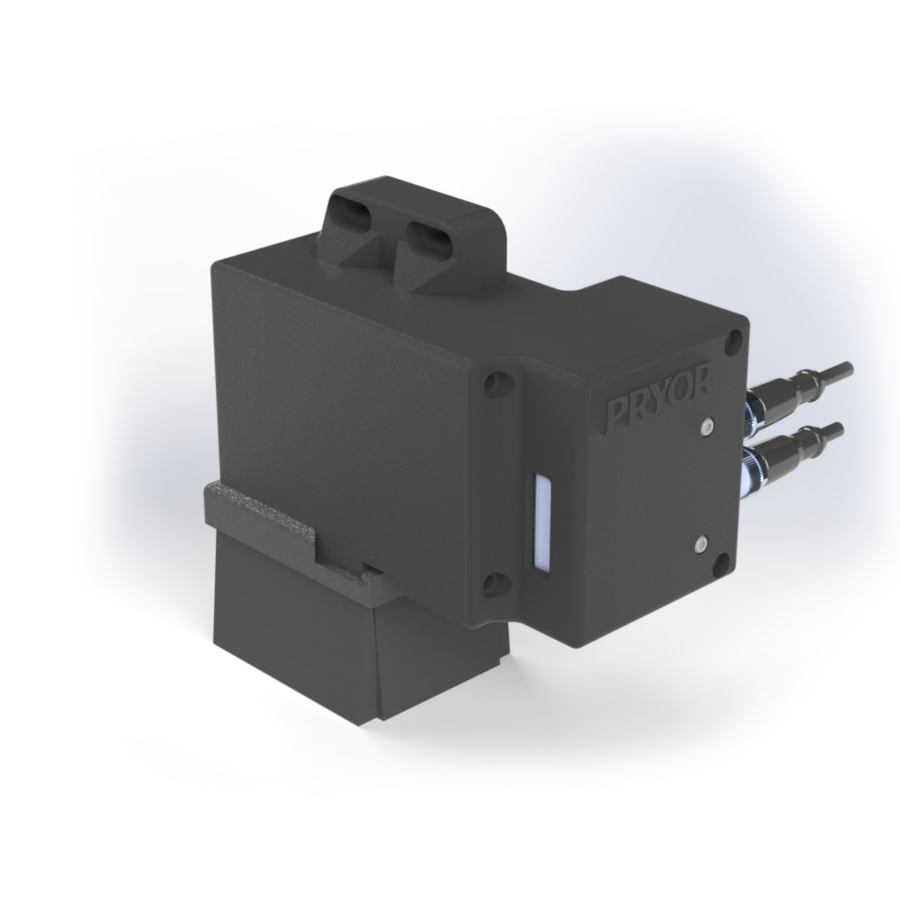
VeriSmart 4 is what you need when a customer or an auditor wants proof, not just a pass. It combines an AI-enabled Cognex In-Sight 2800 camera with a custom Pryor housing and dedicated lighting, and it grades Data Matrix codes against the standards aerospace and industrial manufacturers actually work to: AS9132, Rolls-Royce JES131, RRES90003, AIM DPM and ISO/IEC 29158. It measures symbol contrast, modulation, axial non-uniformity and grid distortion, not just whether the code reads.
OCR and OCV tools validate the human-readable text against expected data, and after every cycle MarkMaster 4 generates a PDF report of images, results and grades, stored against the part number. On components worth six figures, with traceability requirements that don’t leave room for doubt, that documented evidence is the point. Its linear, on-axis illumination performs best on flat, machined surfaces, which is where discs, rings, blisks and casings live.
Choosing the right Vision Camera
The decision usually comes down to one question: what does the specification actually demand? If you only need to know a code reads, paying for full verification grading is money spent on evidence nobody asked for. If your customer requires documented proof that every mark meets an aerospace or industrial standard, ReadSmart 4 won’t get you there. We’d always rather tell you which one you need than sell you the one with the biggest number on it.
Talk to our engineers
We design and build all three cameras into our marking systems at our factory in Sheffield, and every one runs through the same MarkMaster 4 software so your inspection data lives in one place.
If you’re not sure which level of checking your parts actually need, get in touch and talk it through with our team.