
1D vs. 2D Barcodes: A Quick Guide
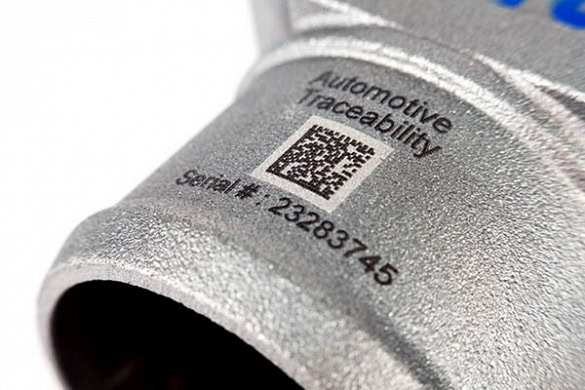
Barcodes have become an integral part of our daily lives. From scanning groceries at the supermarket to boarding a plane, barcodes streamline various processes and provide traceability for businesses. But have you ever wondered about the difference between 1D and 2D barcodes?
1D Barcodes
1D barcodes, also known as linear barcodes, are the most common type you’ll encounter. They consist of a series of vertical lines of varying widths and spacing. These lines represent specific data, typically a number or a short string of characters.
Key Characteristics of 1D Barcodes:
- Limited Data Capacity: 1D barcodes can store relatively small amounts of data, usually up to 25 characters.
- Fast Scanning: 1D barcodes offer quick scanning capabilities due to their simple pattern.
- Linear Reading: They are read by a laser scanner that moves across the barcode, one line at a time.
- Common Applications: Retail, inventory management, and simple tracking systems.
- Popular Types: UPC (Universal Product Code), EAN (European Article Number), Code 39, and Code 128.
2D Barcodes
2D barcodes, on the other hand, offer a more advanced approach to data storage and retrieval. They are composed of a matrix of squares, dots, or other geometric patterns. This matrix can encode a vast amount of information, far exceeding the capabilities of 1D barcodes.
 Key Characteristics of 2D Barcodes:
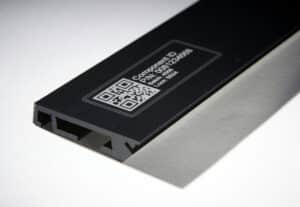 Key Characteristics of 2D Barcodes:
- High Data Capacity: 2D barcodes can store thousands of characters, including text, numbers, and even images.
- Multi-directional Reading: They can be read from any direction, making them more flexible and efficient.
- Error Correction: 2D barcodes often incorporate error correction codes, which can help to recover data even if the barcode is partially damaged.
- Common Applications: Logistics, Aerospace & Aviation, Automotive, manufacturing, healthcare, security, and marketing.
- Popular Types: QR Codes, Data Matrix, and PDF417.
Why Choose 2D Barcodes?
While 1D barcodes are suitable for simple tracking and identification tasks, 2D barcodes offer a multitude of advantages:
- Increased Data Storage: 2D barcodes can store significantly more information, making them ideal for complex applications.
- Enhanced Security: They can be used to encrypt sensitive data, protecting it from unauthorised access.
- Improved Efficiency: By storing more data in a smaller space, 2D barcodes can streamline processes and reduce errors.
- Versatile Applications: From tracking medical records to securing access to buildings, 2D barcodes have a wide range of uses.
The Importance of 2D Barcodes for Traceability
One of the most significant advantages of 2D barcodes is their ability to enhance traceability. Traceability is the ability to track a product’s journey from its origin to the final consumer. This is crucial in various industries, including food and beverage, pharmaceuticals, and manufacturing.
By embedding 2D barcodes on products and packaging, businesses can:
- Track Product Origins: Determine the exact source of raw materials and components.
- Monitor Product Movement: Follow the product’s journey through the supply chain.
- Identify Quality Issues: Quickly pinpoint the source of product defects or recalls.
- Comply with Regulations: Adhere to industry standards and government regulations regarding product safety and authenticity. This is especially important in the Aerospace industry where traceability regulations are especially strict
- Improve Customer Satisfaction: Provide transparency and assurance to consumers about the origin and quality of products.
Why use Dot peen or Laser marking to create 2D barcodes?
Dot peen and laser marking technologies are ideal for marking 2D barcodes on various surfaces due to their durability and precision. Dot peen markers create permanent marks by impacting the surface with a series of precisely controlled pins, resulting in a raised, embossed barcode. This method is particularly suitable for metal surfaces, offering excellent resistance to wear, corrosion, and harsh environmental conditions.
Laser markers, on the other hand, utilize a high-powered laser beam to etch or engrave the surface, creating a high-contrast, permanent barcode. This technique is versatile, working on a wide range of materials. Both technologies ensure accurate and legible barcode markings, enabling efficient tracking, identification, and authentication of products throughout their lifecycle.
Summary
In conclusion, both 1D and 2D barcodes play crucial roles in modern society. While 1D barcodes are well-suited for basic applications, 2D barcodes offer a more powerful and flexible solution. As technology continues to advance, we can expect to see even more innovative uses of barcodes in the future.